Warung Bebas

Jumat, 11 Februari 2011

Sejarah Linux/unix

Nama Linux merupakan kombinasi unik antara nama penciptanya dan nama
sistem operasi yang menjadi targetnya (UNIX). Semuanya
berawal dari sebuah
sistem operasi bernama Minix. Minix dibuat oleh Profesor Andrew Tanenbaum.
Minix adalah sistem operasi mirip UNIX yang bekerja pada PC.
Torvald adalah salah seorang mahasiswa di Universitas Helsinki yang
menggunakan Minix. Walaupun cukup bagus, ia belum menganggap Minix memadai.
Kemudian pada tahun 1991 ia membuat sistem operasi yang merupakan clone UNIX,
yang diberi nama Linux.
Seperti halnya Minix, Linux tidak menggunakan kode apa pun dari vendor
UNIX komersial, sehingga Torvalds mendistribusikan linux di internet secara bebas
dan gratis.
Pada Oktober 5 1991, Torvalds mengeposkan sistem operasinya di newsgroup
comp.os.minix. Ia mengumumkan bahwa source code Linux tersedia dan meminta
bantuan programmer-programmer lain untuk ikut mengembangkannya. Ketika itu
Linux masih setengah matang, sistem operasi ini hanya bisa menjalankan sedikit
perintah UNIX, seperti bash, gcc dan gnu-make. Saat Linux 1.0 diluncurkan pada
1994, sistem operasi ini telah cukup stabil dan memiliki banyak feature, seperti
preemptive multitasking (kemampuan untuk membagi sumber daya CPU untuk
banyak aplikasi) dan symmetric multiprocessing (kemampuan untuk membagi tugas
di antara banyak CPU). Linux bahkan memiliki maskotnya sendiri yang oleh torvalds
Dijelaskan sebagai "seekor penguin yang menggemaskan dan ramah, yang kekenyangan setelah
banyak makan ikan hering".

Pada 1996, tim pengembangan Linux yang ada diseluruh dunia mulai
memberikan hasilnya. Tahun itu mereka telah membuat versi Linux untuk sejumlah
versi hardware, dari Atari ST sampai Macintosh.
Linux terus berkembang pesat, utamanya karena ada sejumlah distributor
(seperti RedHat, Caldera, dsb) yang berkompetisi untuk berebut pangsa pasar. Oleh
karena itu dibentuk kelompok bernama Linux Standard Base. Kelompok ini bekerja
untuk memastikan bahwa beragam distribusi Linux yang ada tetap bisa menjalankan


aplikasi yang sama dan saling berinteroperasi. Saat ini ada tujuh distribusi Linux
paling terkenal, yaitu :
1. RedHat Linux, distributor paling populer di AS dan salah satu yang paling
mudah digunakan.
2. Mandrake Linux, distributor yang menambahkan update dan patch untuk
RedHat Linux.
3. Caldera Open Linux, distibrusi Linux dengan instalasi dan lingkungan
pengguna berbasis grafis yang bagus.
4. Suse Linux, distribusi Linux paling populer di Eropa yang juga
menyediakan perangkat instalasi dan panduan berbahasa Indonesia.
5. Slackware Linux.
6. Debian GNU/Linux.
7. TurboLinux, distribusi Linux paling populer di Asia yang menyediakan
dukungan untuk set karakter khusus Asia.

Oh no, it's GroupWise!

Hi there Reader,

For many years when I talked to a client about their network environment, these would be my words 'Oh no, it's GroupWise!' but not anymore!

Read more »

Dear Randall

You are, truly, the reason why Computer Scientists* make fantastic comic writers. Thanks for making me laugh today.

♥,
FCS

(*) I guess technically you're a physicist, but really, what's a few bits and atoms between friends?

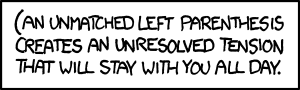
http://xkcd.com/859/

Kamis, 10 Februari 2011

My Gluten-Free January

I've been avoiding most gluten, particularly wheat, for over a year now. I never had obvious symptoms that I could clearly link to eating wheat, although I had my suspicions. I've made many changes to my diet over the last decade, and I feel much better than I did ten years ago, but it's hard to disentangle all the factors. I don't think I ever went an entire month without eating any gluten at all before this January. After posting Matt Lentzner's challenge to go gluten-free this January, I felt obligated to do it myself, so I signed up!

I succeeded in avoiding all gluten for the month of January, even though it was a pain at times. I felt good before January, and didn't start with any health or body weight problems, so there wasn't much to improve. I also felt good while strictly avoiding gluten this January, perhaps a little better than usual but it's hard to say.

At the end of the month, I did a blinded wheat challenge using the method I described in a previous post, which uses gluten-free bread as the placebo (1). I recorded my blood sugar at 30 minute intervals after eating the bread, and recorded how I felt physically and emotionally for three days after each challenge.

The result? I think the bread gave me gas, but that's about it. I'm not even positive that was due to the wheat. My energy level was good, and I didn't experience any digestive pain or changes in transit time. There was no significant difference in my blood glucose response between the bread and the gluten-free bread.

I decided that I didn't have any symptoms, so I celebrated by having a porter (1) with friends a few nights later. I slept poorly and woke up with mild digestive discomfort and gas. Then I ate wheat later in the week and slept poorly and got gas again. Hmmm...

Some people might say that the body adapts to any food, and wheat is no different. Go without it for a while, and the body has a tough time digesting it. But I can go for weeks without eating a potato, a chicken thigh or broccoli, and all will digest just fine when I eat them again.

I'm pretty sure I don't have a severe reaction to gluten. I think I'm going to stick with my mostly gluten-free habits, and eat it occasionally when I'm offered food in social situations.

Did anyone else do a blinded wheat challenge? Describe it in the comments!

The Role of CS Postdocs

The Computing Research Association (CRA), the major professional organization for Computer Science in the US, has a new white paper on the role of postdocs in CS Research. It's excellent, very thorough, and has several interesting graphs. (Including who's hired in what areas over the past few years.) The white paper is up for people to leave comments if they are so inclined, until March 15th.

I haven't had time to read the report in depth, but a few things jumped out at me as interesting:
  • 42% of all CS PhD graduates are hired into industry immediately after completing their PhDs. (I affectionately refer to this as the Google Slurp). However, there is a large category of "other", which sadly includes the unemployed. So maybe that old statistic that less than 1% of PhDs in Computer Science are unemployed is no longer true, eh? 


  • Here's the graph of who got hired in what. Everybody is going downhill, but it looks like Architecture and Theory people are hurting the most in hiring. Which correlates with my anecdotal information. 

(Why aren't Security, CS Education, or Ubicomp listed as fields? I would not consider any of them to be subfields of any of these really. They are their own fields).

  • This table is really interesting. Compared to other fields those of us in CS/Math hardly postdoc at all:


Anyway, interesting stuff - check it out and leave comments if you have them. CRA is a well-run organization, if you comment I strongly suspect your opinions will be taken into account - not just for future white paper drafts, but also for recommendations they make to Congress and various funding agencies. (I know CRA and NSF in particular are usually fairly kissy kissy. CI Fellows anyone?)
 

ZOOM UNIK::UNIK DAN UNIK Copyright © 2012 Fast Loading -- Powered by Blogger