Warung Bebas

Senin, 28 Juni 2010

Err on the side of "Doctor"

DrugMonkey's post on academic titles reminded me of something I wanted to mention.

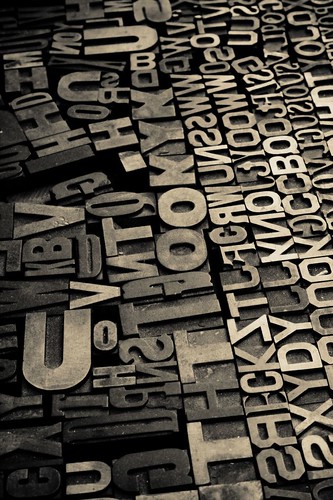
Photo by Cybertoad
When addressing someone in an academic context whose gender and/or academic ranking is unknown, it's generally best to err on the side of "Doctor". The worst that happens is you're wrong and they're flattered.

Recently a colleague (C1) invited another colleague (C2) to review a paper. C2 is a woman, and a postdoc. C1 is a male academic researcher. If one searches for C2's name, the first few hits clearly show that she has a PhD, and also that she appears to be a "she". But for some reason, C1 entered C2's information into the reviewing system as "Mr. C2 Lastname". C2 has spent a lot of time in a country which has a masculine culture, so she's probably not phased by this, but I find I am a bit. Why is "Mr." the default?

Another FCS and I were once in charge of allocating a small pot of money and advertised a call for applicants. Several applications we received were addressed, "Dear Sir". I just couldn't wrap my head around this. If we both didn't have photographs on our webpages (which both show us very much looking female) I could maybe excuse this error. But even still, the applicants could have written, "Dear Committee Members" or even just "Dear FCS1 and FCS2." Ah well... too bad about that funding. ;)
what's a girl....


gotta do to sport a cute outfit like this one??! i think it needs to magically appear in my closet. it would be a lot cuter then the t-shirt and gym shorts i am currently living in these days. it's that elastic band that keeps me coming back for more....

*images courtesy of house and home, urban electric, the zhush

Minggu, 27 Juni 2010

Mendeley news

Few months ago I posted about Mendeley, the reference management system. I've been using it all the time and I am really satisfied. It is much more convenient to have your papers on a server than on a flash drive. Also keeping meta-information about the papers makes dealing with them (exploring, reading, citing etc.) more pleasant.

In this month a major update was released and a monetizing scheme was introduced. There are now 3 tariff plans in addition to the free one that allows one to use up to 1Gb of server disk space. There are also restrictions on the max number of shared collections and the number of users per collection. It does not look critical after all: there are no features you cannot use in the free version, so the company seems not evil. However, on the sister project last.fm the radio feature became paid after years of free service, which caused many users drift to grooveshark.

The update has affected the design of the paper info right-hand bar, and the references bar was eliminated. They promise to rebirth the bar in the future releases. It was really unusable before. When you read a paper, it is handy to have the list of indexed references on the bar, especially if the reference-style citing is used (it is the major problem with reading papers from the screen: where the hell [42] is referencing to?) I hope the people in Mendeley realize it.

It would be great to have a possibility to find papers without leaving the application. In theory, you could drag a citation from the references bar to a collection, find its (more) precise details via Internet search, and you are likely to have the link, and if it is direct, you can add the pdf with the Add File dialog using the found URL. In practice, the found URLs usually are not direct, they refer to IEEE/ACM/Springer pages, where the paper could be downloaded (usually not freely). In the same time, the paper is likely to be available for free through the direct link on the author's homepage. Moreover, Google Scholar often finds them too, but Mendeley chooses indirect links.

Mendeley needs to be more "semantic" while working with authors and conferences. It stores the author name as it appears in the paper. When you want to filter your papers by author, you can see "Shapovalov, R", "Shapovalov, R.", "Shapovalov, Roman", "Shapovalov, Roman V." etc. in the list. There are bases like DBLP, Mendeley can build their own index, so the author should be identified. If we know the author (but not only her name appearance in the paper), we are able to filter Google Scholar results and retrieve the direct link to the paper hosted on the author/university site. Finally, it is feasible to create the system, where human don't need to find papers. If I see the reference, I can automatically retrieve the pdf in a few seconds. I want Mendeley to develop in this direction.

Sabtu, 26 Juni 2010

Mobile Scholar: Part I

Image by Mike Licht
I am trying to turn my iPad into a laptop in order to lighten my load while traveling (and save my poor neck). It will never replace a proper computer from a software development perspective, but from a scholarly reading and writing perspective I am almost there.

The Chronicle had a nice post in ProfHacker regarding PDF annotation and organization, and Christopher Long has also written in greater detail about how one goes about "Closing the Digital Research Circle". For PDF annotation, syncing, and citing, I strongly suspect Mendeley is going to win the race. As much as I love the idea of Zotero, I just don't use Firefox on any of my machines or mobile devices. (I did enjoy using the open source Aigaion, but once my entire bibliography got trashed while upgrading I decided to stick with the pros). Mendeley can be buggy, but as one person said, "When it works, it works really well," and they're right.

Anyway, that's still just consumption and management of existing content, which is only half the problem. The other is creating and editing manuscripts.

In my field, everyone writes papers in LaTeX. Some journals and conferences occasionally permit the submission of Word documents, but personally I have a hard time understanding how anyone can do that without pulling their hair out. The last time I wrote an article in Word I spent several days dealing with misplaced references, unusual figure formats, caption problems, and incompatibility issues. When I write in LaTeX I can just focus on the writing and ignore everything else. (Kind of like writing a program in Java vs. C++)

But how to write LaTeX on the go? Due to a lack of multitasking in the present OS, as well as Apple forbidding any applications that compile code (e.g., no easy way to typeset your documents), what's a body to do?

I recently found LaTeX Lab, which lets you edit and typeset LaTeX Google Docs. Hooray! Almost there!

...sadly, Google Documents are not yet natively editable on the iPad.

I can, of course, remote login to my machines back at the office using virtualization software and edit LaTeX files there, but that just feels so inelegant. So we're not there just quite yet. I'm going to try a few things over the next few weeks and will report back.

Jumat, 25 Juni 2010

"But you don't look like a computer scientist!"

Joe McCarthy has an interesting post about the Boopsie Effect, "wherin women in upper-level positions in historically male-dominated professions find that 'attractiveness suggests less competence and intellectual ability'". He discusses some female computer science researchers he knows who have felt compelled to conceal their attractiveness in order to be taken seriously by their colleagues.

This is a picture of Hedy Lammar, silver screen 
actress and wireless security pioneer.

Photo by BooBooGBs
I thought this was an interesting comment, because I've fortunately never encountered this sort of problem from my male colleagues. However, I have most certainly encountered this from the lay public.

For example, I recently bought an iPad while traveling. Because I had suitcases to carry, I accepted the Apple store employee's suggestion to open the box and register the SIM card so I could leave all the packaging at the store. After he finished I began to gather my bags and he said, "Do you need any help setting up your email?" to which I replied, "No thanks, I'm a computer scientist." He had a look of shock on his face and said, "Oh! I underestimated you!"

I'm still not entirely sure what to make of that comment. What are we computer scientists supposed to look like exactly?

Of course this comment isn't nearly as bad as one I received a long time ago. I was out with some friends, and a man came over and started talking to me. He asked me what my profession was. I told him, and he said, "But you don't look like a computer scientist!" I had to leave the room for a second, and when I came back he was gone. Perhaps he was hoping I looked more like Hedy?
 

ZOOM UNIK::UNIK DAN UNIK Copyright © 2012 Fast Loading -- Powered by Blogger